Diesen Beitrag gibt es auch auf Deutsch. Auf Deutsch lesen →
The first fitting is an exciting affair for tailor and customer alike. Especially when the customer has truly commissioned something from a tailor for the first time in his life. A man who is not enthusiastic about clothes will not be able to feel it. But a real devotee of bespoke, who has dreamed of this moment for years, will await it with great anticipation and then, one hopes, enjoy it.
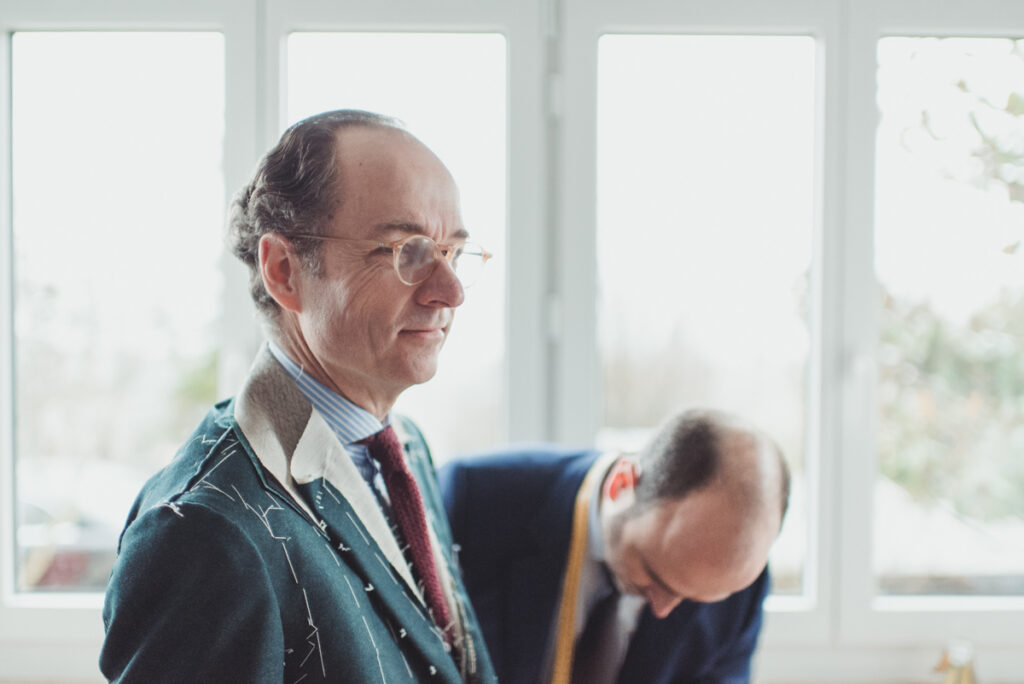
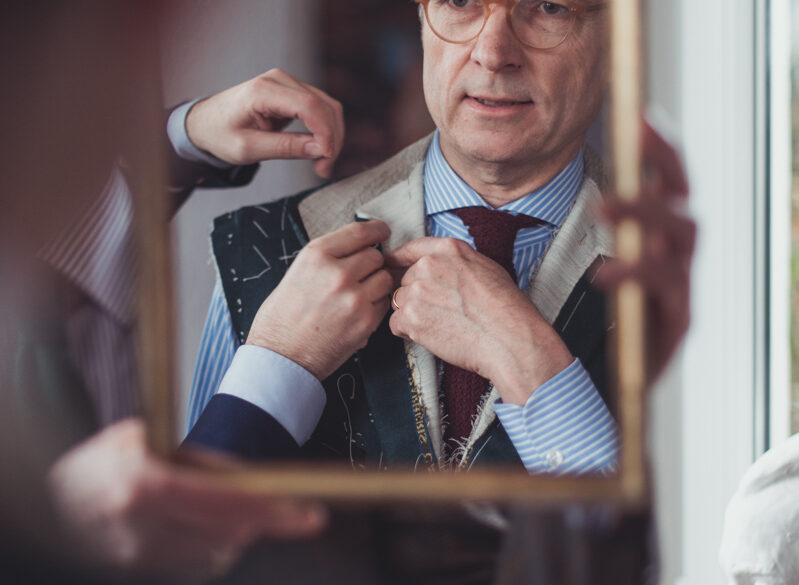
Ordering the suit is exciting enough given the cost involved. But most tailors radiate so much professionalism that one usually feels in good hands. If no good feeling arises, it might point to a poor choice of tailor from the outset. It can also be a sign that the customer is very unsure, or even mistrustful. In the best case the customer goes on his way confident and full of anticipation. In the time until the first fitting, which takes at least a few days but usually several weeks, doubt can creep in. Was it right to order a double-breasted? Should I have ordered the pockets with flaps after all? Was it wise to have the trousers cut for braces? And above all: will I still like the cloth when I see it as a complete suit? There is plenty of occasion for doubt and brooding. The tailor, by the way, is often just as tense before the premiere of his suit, if not more so. For him it may be a matter of his business surviving, or of his employer’s goodwill if he is employed. And of course of the customer’s satisfaction. What face will the customer make when he slips on the jacket and sees himself in the mirror for the first time? In fractions of a second it is decided whether the customer is satisfied, or at least not dissatisfied. Experienced tailors know this. If the customer spontaneously smiles and relaxes, the commission is as good as done in that moment; what follows is only routine. But if the customer shows no reaction, or even looks into the mirror in alarm, the tailor has a hard piece of work ahead. And even if the customer then claims to be satisfied, he usually is not. Only if he really comes back one day has the tailor managed to give the whole thing a happy turn.
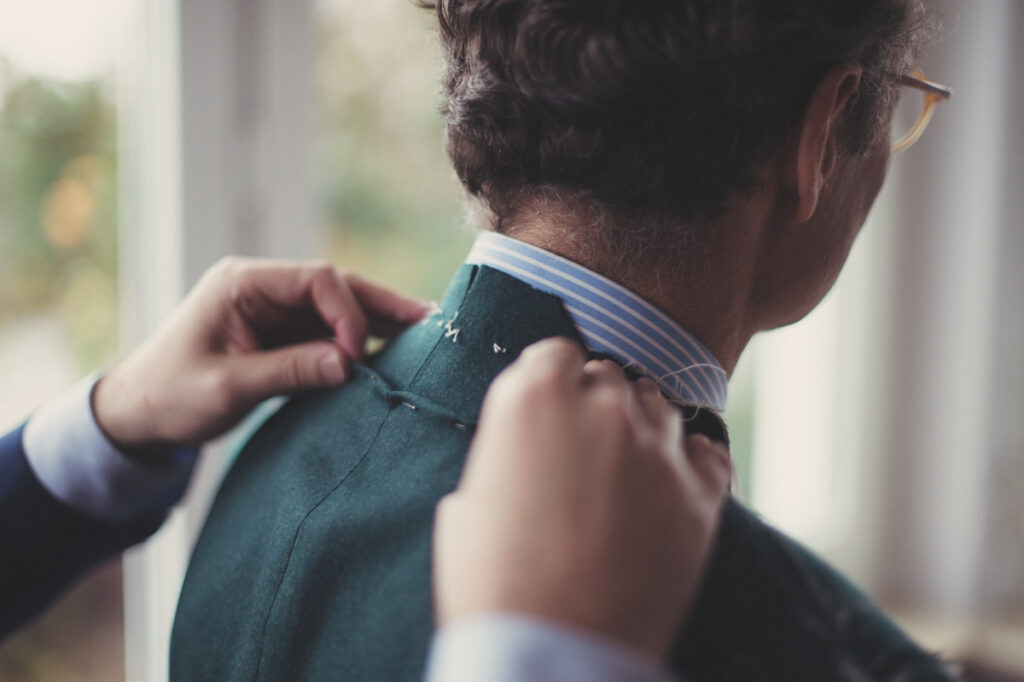
After the cutter has cut the cloth, he hands it, together with all the interlinings and trimmings, to a specialist jacket, waistcoat or trouser maker. Depending on the size of the firm these are salaried staff or outworkers. These specialists prepare the first fitting. In smaller workshops the cutter takes on this step himself. That is often an advantage, since he also constructed the pattern and knows the customer, so he can let the particularities of the figure feed directly into the fitting.
In larger ateliers the cutter’s work ends for now with handing the bundle to the individual tailors. Until the fitting is ready he will attend to other customers. Meanwhile a good deal happens in the workshop: the interlinings are washed and pressed to prevent later shrinkage, the shoulder pads are cut out and sewn together in layers, the individual parts of the trousers, waistcoat and jacket are basted together, and finally the provisional suit has to be pressed into shape. Depending on the fineness of the cloth and the individual pace of everyone involved, many hours of work already arise at this early stage, spread over weeks and months, or only a few days if the customer is in a great hurry.

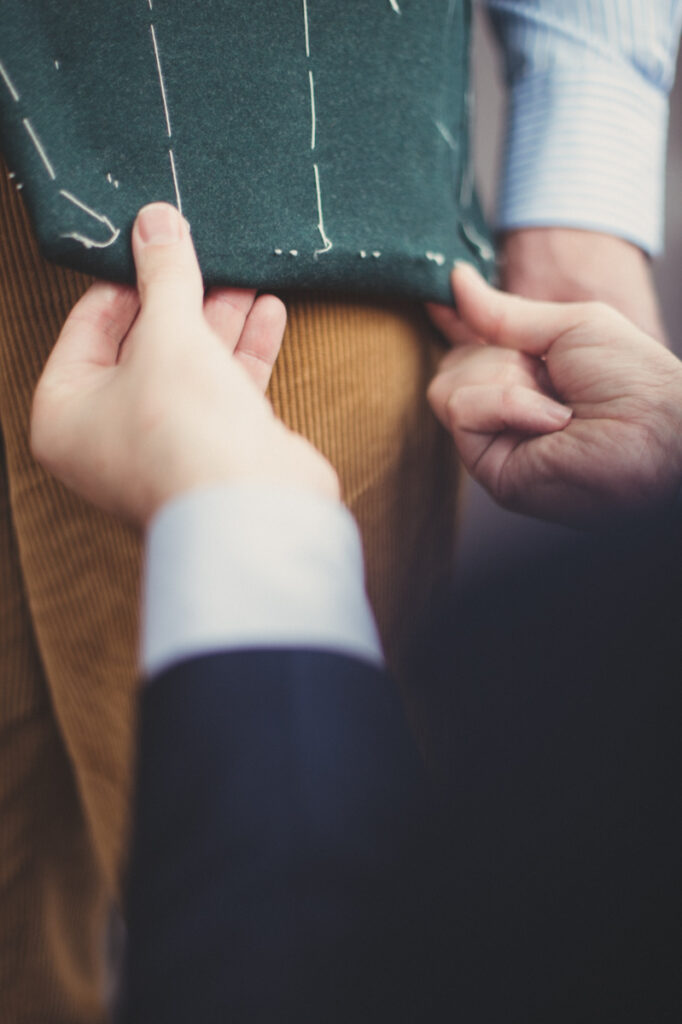
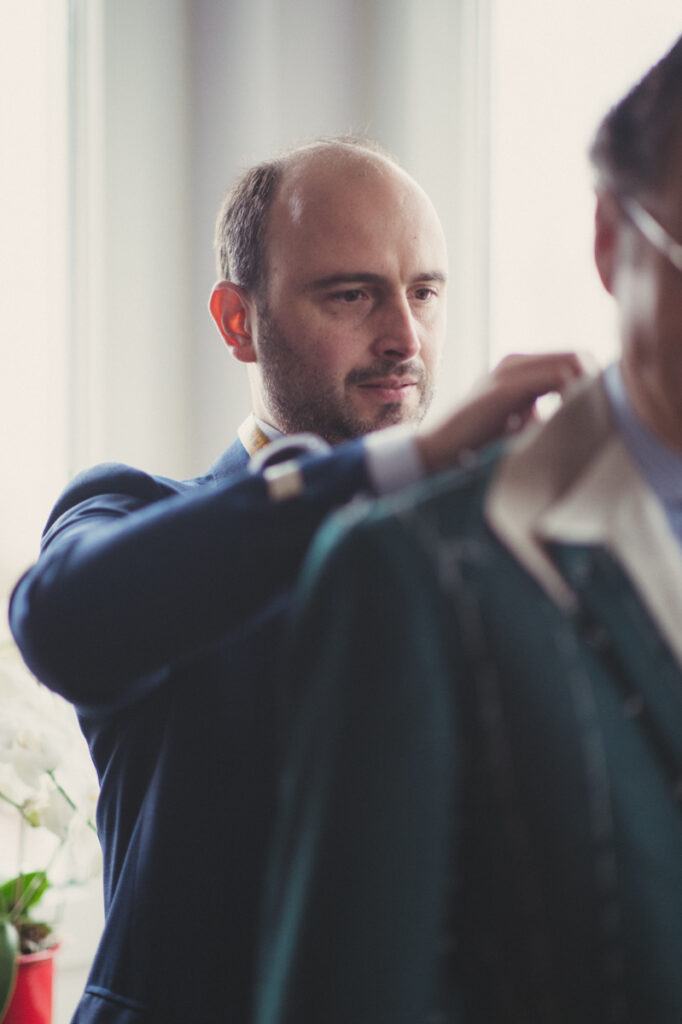
The first fitting is not only for a stylistic check; the cutter also uses it to balance the jacket precisely. Even if he has already accounted for those particularities of the figure that are decisive for balance when drawing up the pattern, the test on the living object remains indispensable. For instance, the customer may have taken an unusually upright posture while being measured. If he now relaxes at the fitting and leans his body slightly forward again, the jacket is suddenly too long at the front. Another possible problem is a change in weight between the measuring and the first fitting. If the customer has put on weight, the jacket may already not fit as planned.
Here is the website of Markus Schnurr.

This text is an excerpt from Bernhard Roetzel’s book „Der Gentleman nach Maß“, published by h. f. ullmann.
Read more on Simon Crompton’s Permanent Style
Bernhard writes occasional guest articles for Permanent Style, Simon Crompton’s English-language magazine.
- The best German tailors working today. Bernhard’s overview of the best German bespoke tailors.

