Comments or questions? Bernhard Roetzel replies.
Diesen Beitrag gibt es auch auf Deutsch. Auf Deutsch lesen →
Photos: Tommi Aittala
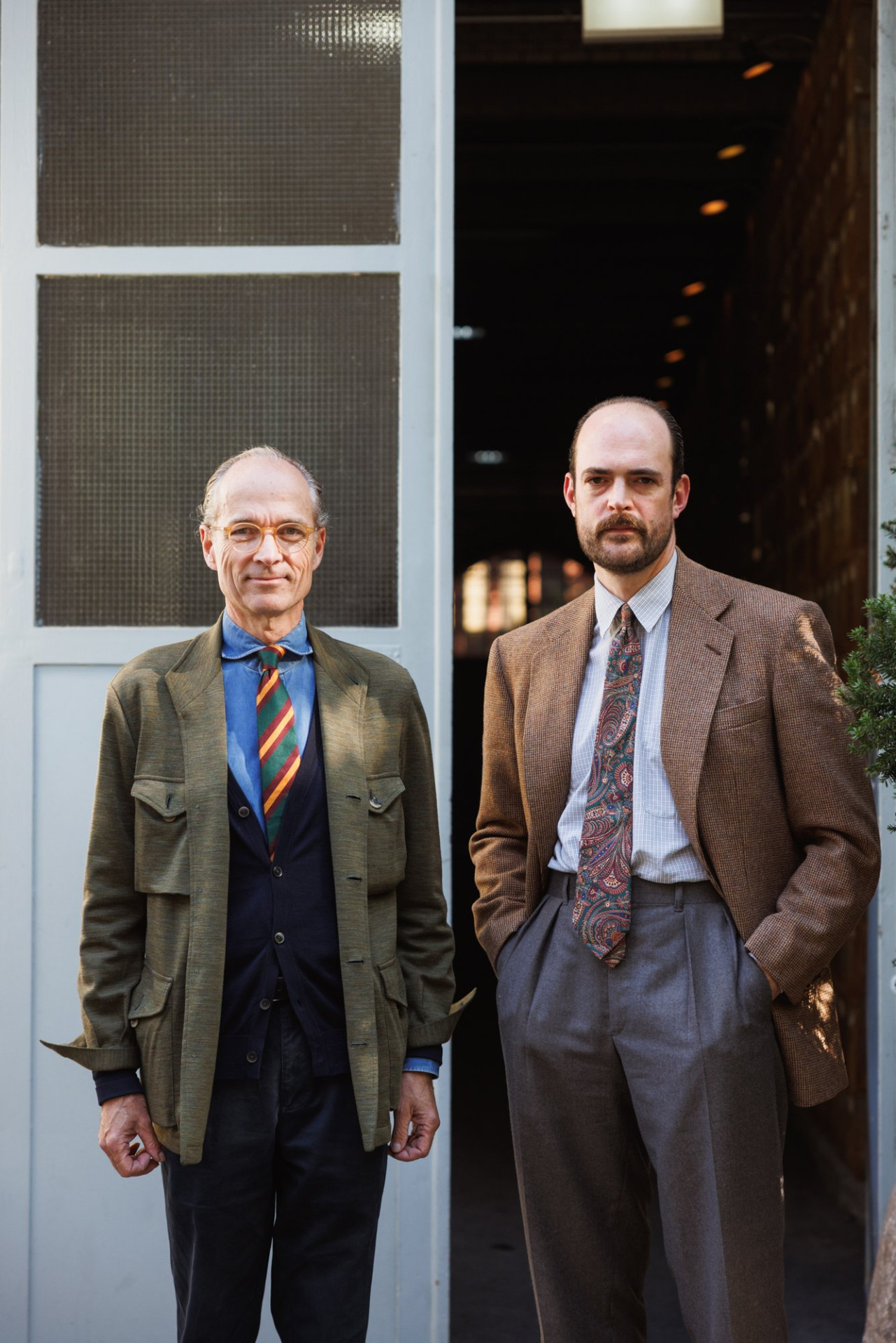
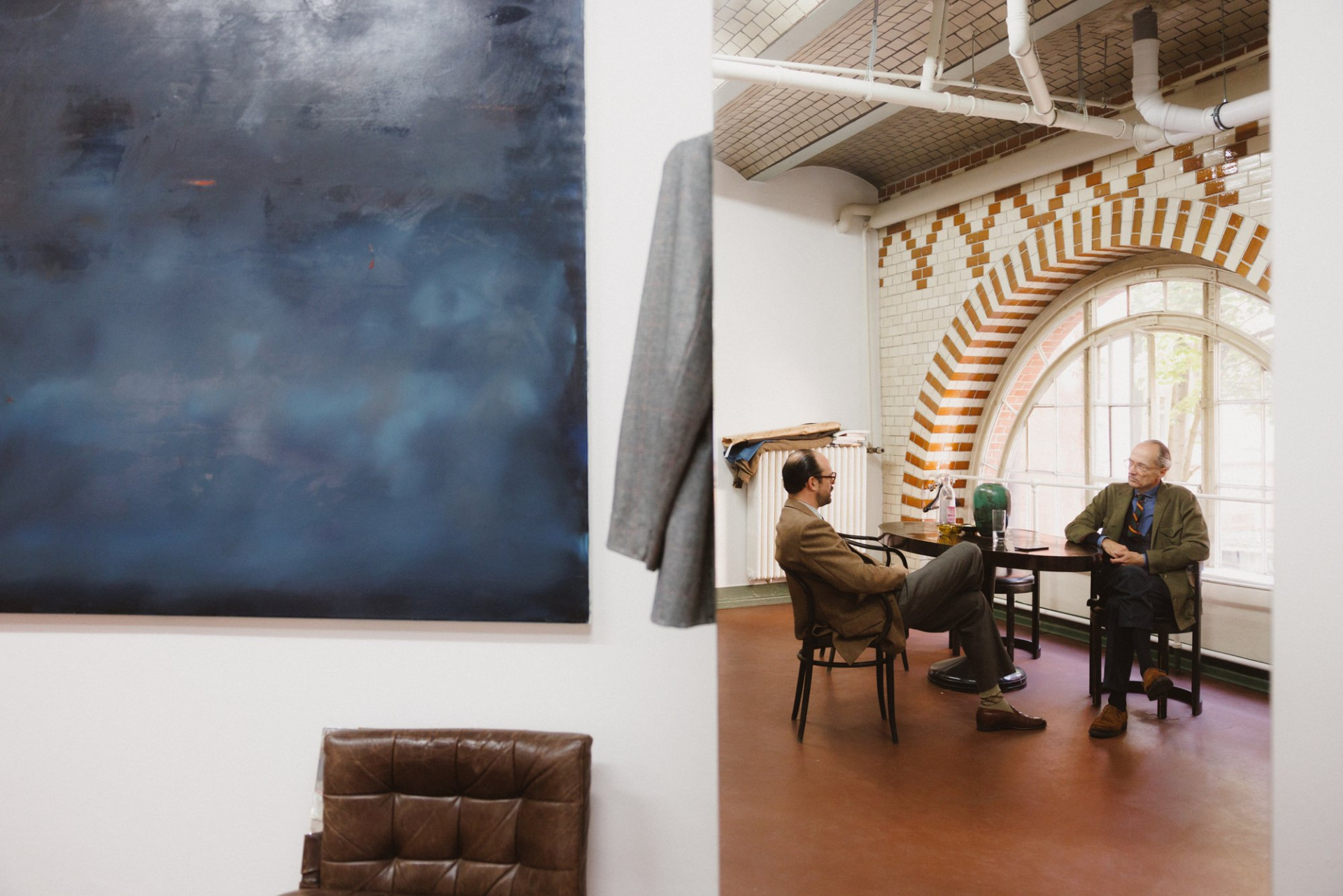
I first interviewed James Whitfield for Der Feine Herr some years ago (here is part one of our series). The London tailor, trained on Savile Row, runs his own bespoke atelier in Berlin-Moabit. A lot has changed since our last conversation in 2021: he now works alone and does every step of the work himself. We held the new interview in his atelier in October 2026. Myths about custom clothing are also the subject of “Fits perfectly and lasts forever?”.
Doing everything himself
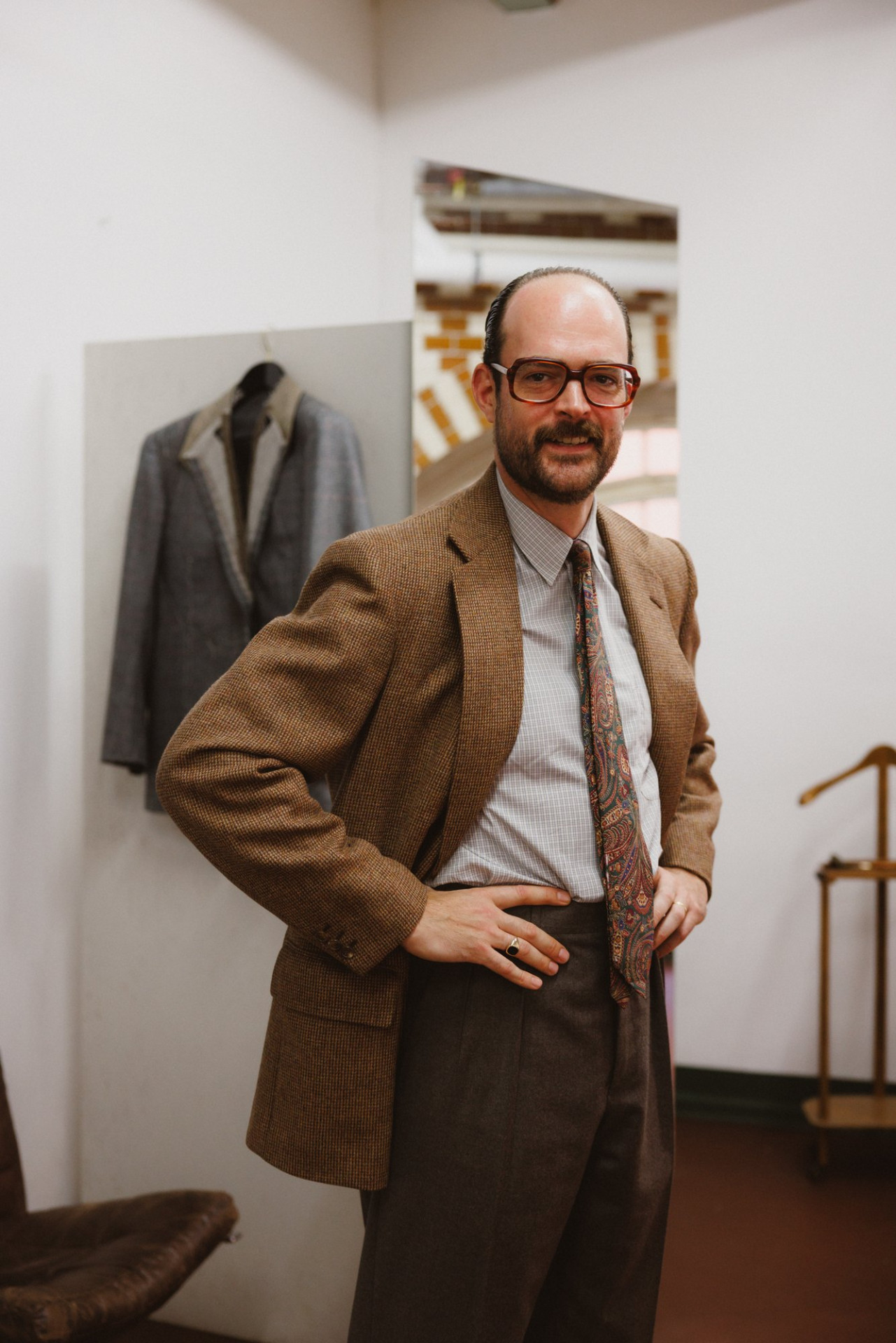
BR: Well, it looks the same. You just mentioned before we started recording that you’re now working the way many continental tailors work, especially in Italy. You’re doing everything yourself, which is great.
JW: I’m a true one-man band.
BR: Is that unusual for Savile Row-trained tailors? Because usually you have specialized tailors for these finishing jobs.
JW: Yeah, absolutely. You even have pressers, you have people who make pockets. It’s much more divided up into processes: cutters, coat makers, trouser makers, finishers, pressers. So it’s a very different way of doing things.
BR: Did it take some time to get used to it and to acquire the skills for these small works? Being a cutter is one thing, and then making perfect buttonholes is another.
JW: I could already make buttonholes and that sort of thing. Obviously when I started doing it this way I was a little bit slower, but after a couple of years you’re up to speed.
BR: So it really takes years to do it really well?
JW: It doesn’t take that long. But there are things you like to do and things you don’t like to do, and of course you’re more motivated to do the things you enjoy. I’ve got used to it now, and I do enjoy doing the whole process and having total control over every aspect of it. It’s obviously difficult to do a lot of work that way, so it’s not a great way to grow the amount that I do.
BR: If you look at London, are there any tailors working this way, or do you still have so many outworkers that it’s not necessary?
JW: I can’t say there are none. But for any of the larger houses it’s just not possible. They’re doing such a gigantic amount of work.
Dressing left or right, armholes and roll lines
BR: When you read about tailoring in internet forums, there’s always the question: do you dress to the left or to the right? When I had my first suit made on Savile Row in 1998, nobody asked this question. Is this question another myth?
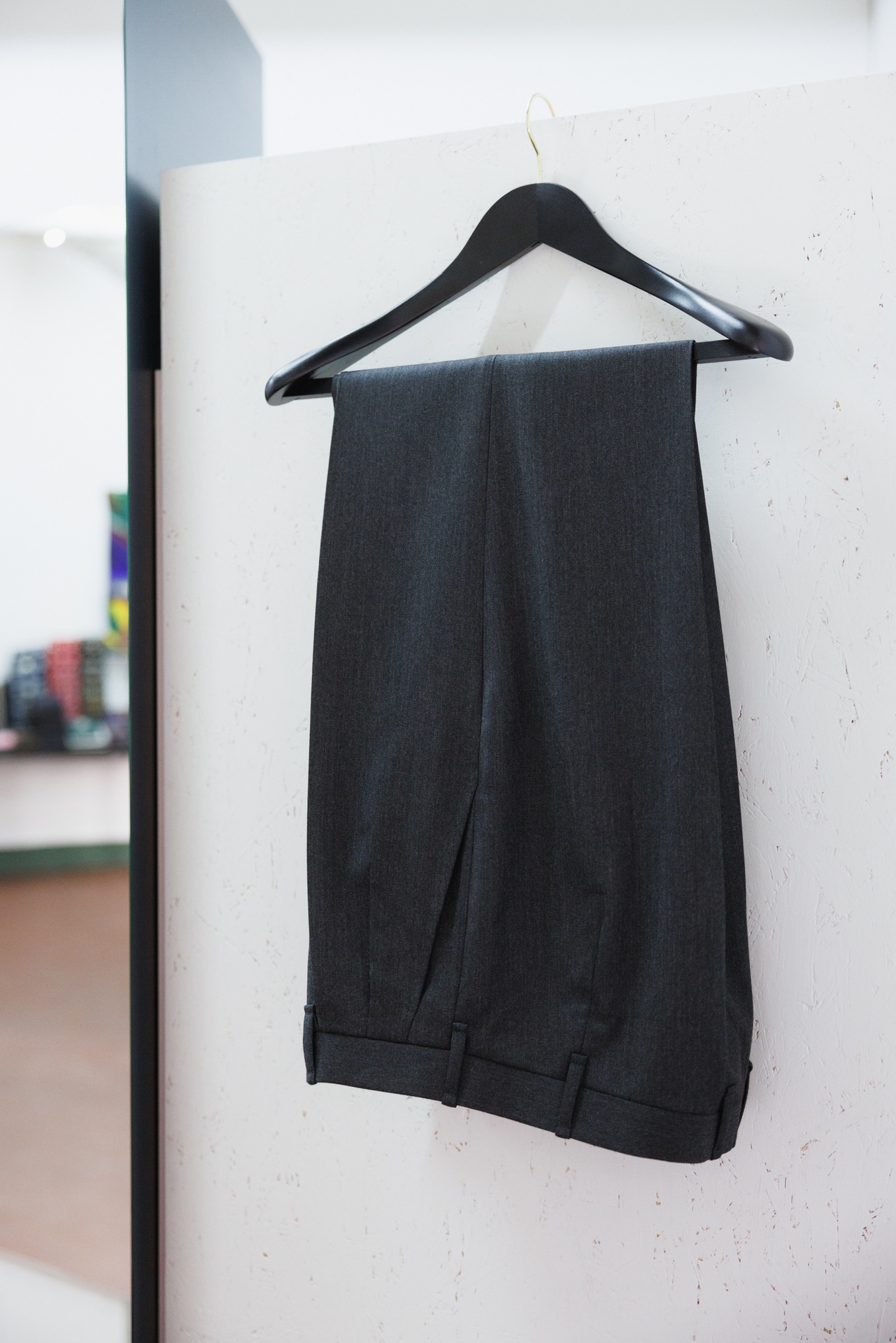
JW: If you’re making a very tight-fitting pair of trousers for a well-endowed man, maybe you would have to. But I don’t usually cut for it, because I’m mostly cutting pretty easy-fitting trousers. Maybe it’s necessary for some people. I’m sure there are a million people out there who strongly disagree.
BR: Are there other clichés that you hear when you meet first-time customers, expectations about bespoke tailoring?
JW: Sometimes people have heard things about the technical side. For instance people talking about cutting a very high armhole, or putting a very large sleeve into a small armhole. In the end you just cut the armhole that fits the person and you cut the sleeve that fits the armhole. There’s some truth in it, as with all these things. It’s true that a higher armhole gives you greater range of movement when you lift your arms. But it’s not necessarily true that this implies what people say. It’s quite difficult to say this is absolutely wrong, but it’s become a bit of a meme where people are obsessed with these aspects.
BR: Especially with the small armhole there’s this idea that the jacket stays put on the body. If you reach up, the jacket doesn’t move.
JW: It always moves to some degree. There’s some idea that a small armhole keeps the jacket on the neck, but that’s not what does it. What keeps the jacket on the neck is the balance, the back balance. If you have a balance that’s too low at the back, it’ll fall away.
BR: An overcoat obviously has a deeper armhole, because the jacket has to go through it.
JW: The overcoat armhole is usually sunk slightly, maybe half an inch or so, and the back balance on an overcoat is usually longer. But whether it comes off the neck or not has nothing to do with the depth of the armhole.
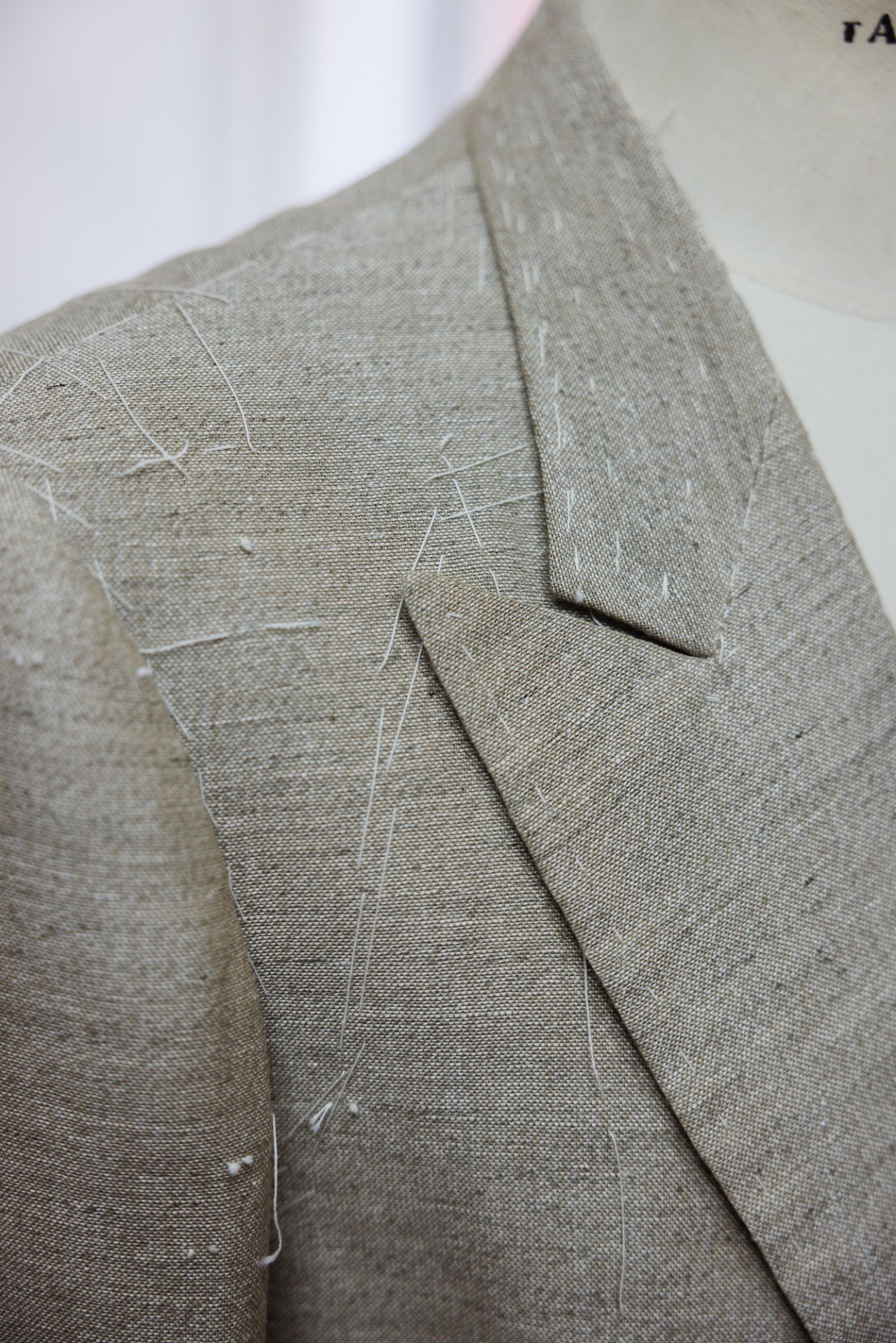
Another one is the idea that the chest canvas controls the roll line. You’ll hear people say the chest canvas is what keeps the roll line in position. That’s obviously not true. The collar is what controls the roll line. If you put on a collar that’s too short, it will make the roll go down the jacket, and a collar that’s too long will make the roll too high. The chest canvas has no more control over it than that, if you see what I mean.
Hobby, criticism and trust
BR: I find these things very difficult for someone who’s not a cutter or tailor. It amazes me that some people confront a tailor, an expert, with these technical questions, even though they have very limited knowledge.
JW: I think the thing about it is that this has become a niche, a craft that’s closer to a hobby than to everyday wear. In the past everybody wore a suit. You went to the tailor you could afford, you got a suit made, and you didn’t really think about how it was made. You thought more about the style: the lapel, the way the front is cut away. You were more concerned with the aesthetic choices. Because it’s become a hobby, people are interested in it the way people collect stamps or crockery or whatever.
BR: Cosplay.
JW: Yeah, cosplay. This attracts people who are very, very into the whole thing, who want as much knowledge about it as possible. I think that’s totally fine, and great for people who are interested. And because we’re not wearing suits anymore, most of us tailors survive because people are interested in this in a niche, hobbyist way. So it’s great that they want to learn more. But sometimes they think there are set rules or techniques they must know about, and that this will help them understand whether they’ve got a good product or not. They’re maybe not seeing the wood for the trees: does my jacket have this particular canvas construction, this armhole height?

BR: When I had my first striped suit made, the stripes between lapel and collar matched differently on both sides. I asked John Coggin why, and he said it’s easy: it’s because of the dropped right shoulder. He had to lift the front at the second fitting, and then the collar was already cut and didn’t fit in. To me it sounded like a good explanation.
JW: I disagree a little. There’s a way to cut a drop where you can still get the collar and the front to match on either side. But it’s true that occasionally people ask why the stripes don’t match at the shoulder seam. That’s because the back is larger than the front, you’re filling in the back, so the stripes are effectively narrower at certain points, and the front and back shoulder seams are at slightly different angles. So it’s not possible to match the stripes there.
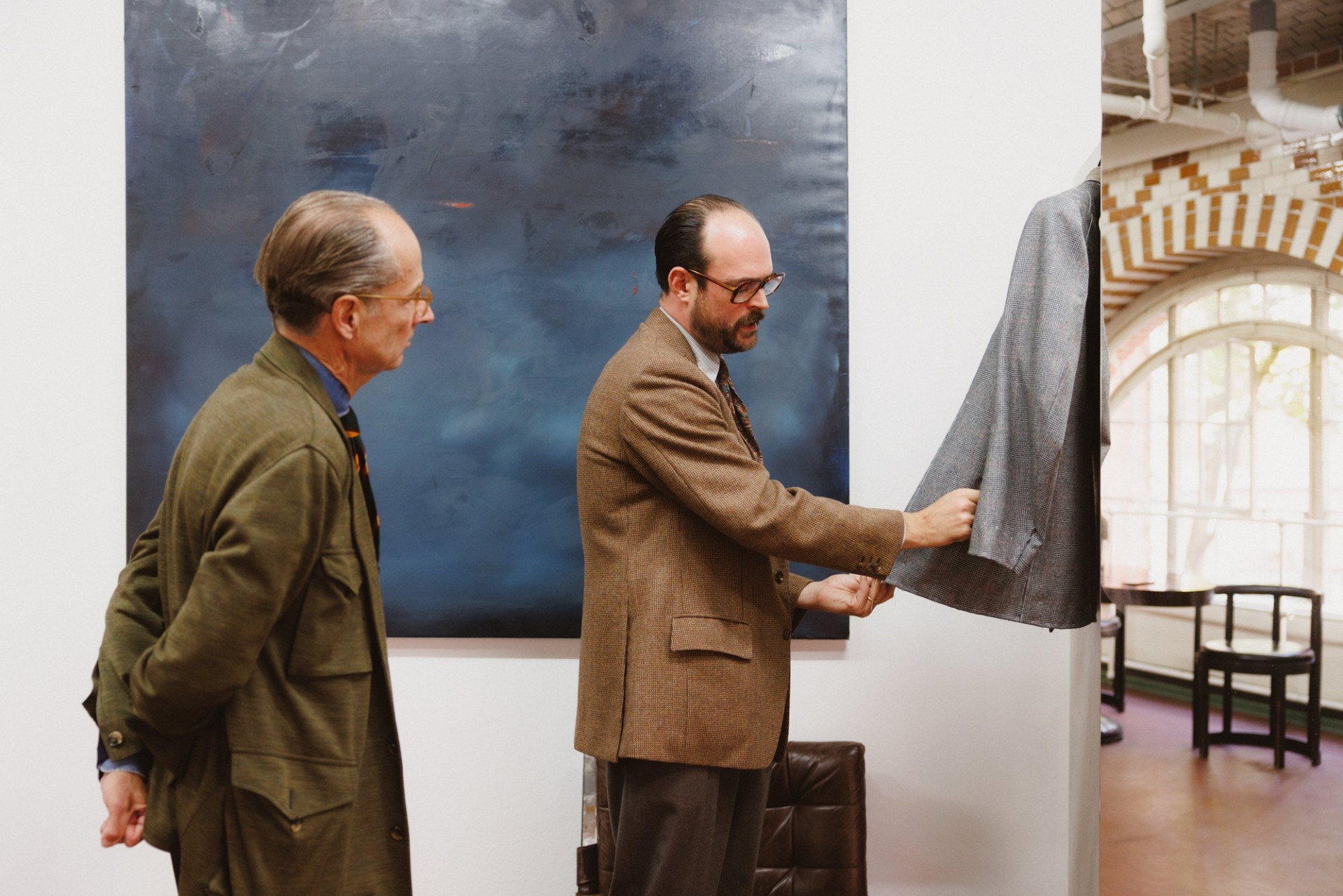
BR: But at some point you have to let go and relax.
JW: Exactly. You should like it because you like it. If you go online, everybody’s a critic of the making. That’s true about everything on the internet. Criticism is important in a way, what you do, or any number of people with some taste-making expertise in this area, that’s all good. But I think people should worry about the aesthetics rather than the technique. As long as you trust that your tailor is actually making it, and making it well, and as long as you think the fit is good, or even better, the fit actually is good and the construction is good, then you don’t need to worry whether your tailor has followed a rule you heard about on the internet.
BR: You just mentioned the word trust. It’s like going to a garage. I can’t repair a car, so I always have the feeling they cheat me to some degree, but I accept it as long as they don’t make me feel it too obviously.
JW: Do you know the old tailor joke about the guy who goes to his tailor, and the suit’s finished, and he tries it on and it looks terrible in the mirror? The tailor says, no, no, you’ve got it all wrong. You have to hold your arm up here, stick your leg out like that, and walk like this, and then it looks beautiful. He’s a little confused, but he takes it, goes outside, and he’s walking down the street like that, and a couple walks past him. The wife says to her husband, oh my God, that poor man is so hideously deformed. And the husband says, yes, but he’s got a fantastic tailor.
BR: Very good.

Toile and window-pane check
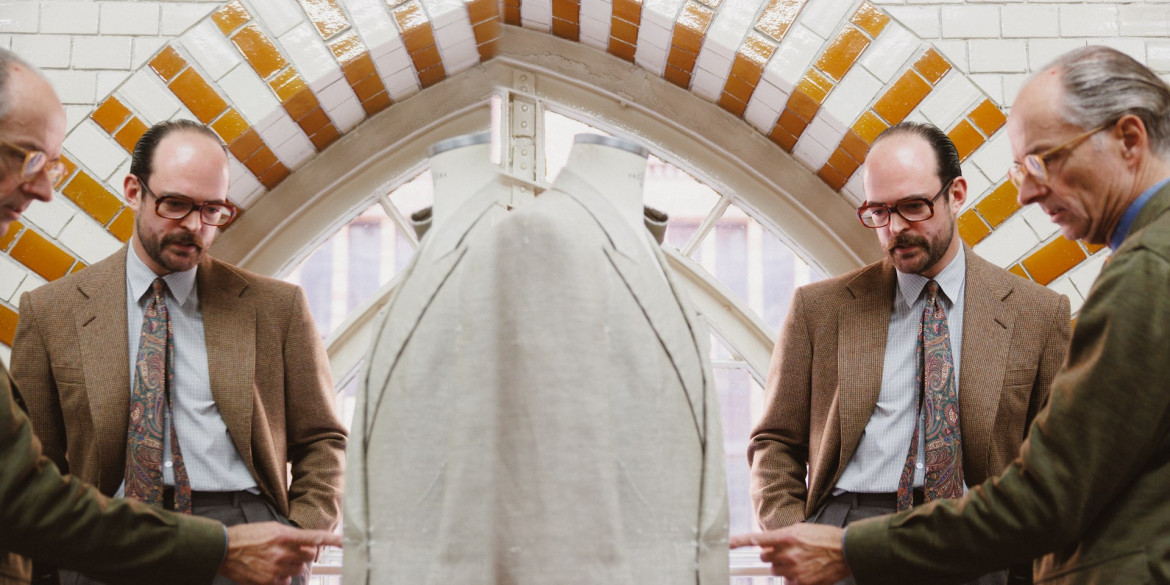
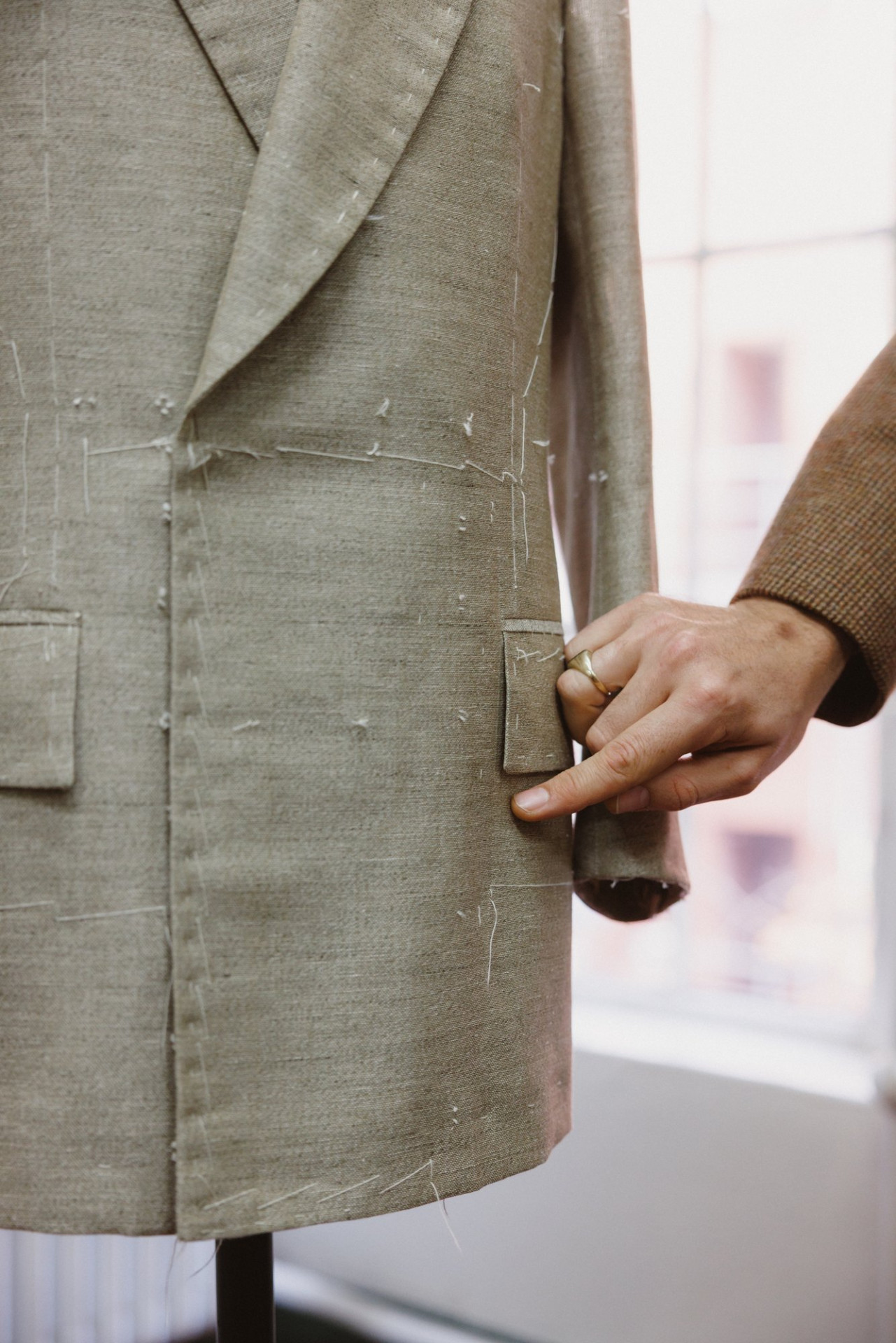
JW: The window-pane check, for instance. I have a customer who brought in his own cloth, a very nice check, it’s going to make a lovely jacket. But I don’t want to cut it until I’m really sure I can do all the check matching after all the fitting. So I made a toile, a prototype. This is the toile, an old piece of fabric, a scrap I had left over from a length where I couldn’t get anything else but front, back and sleeves out. There wasn’t room for facings or pockets, so it was only about a metre twenty, couldn’t get trousers out of it. But now I can try it on and see: is the balance right, do the sleeves hang correctly? I can make all the adjustments, calculate how I want the check to sit, and everything, before I put the scissors into his cloth.
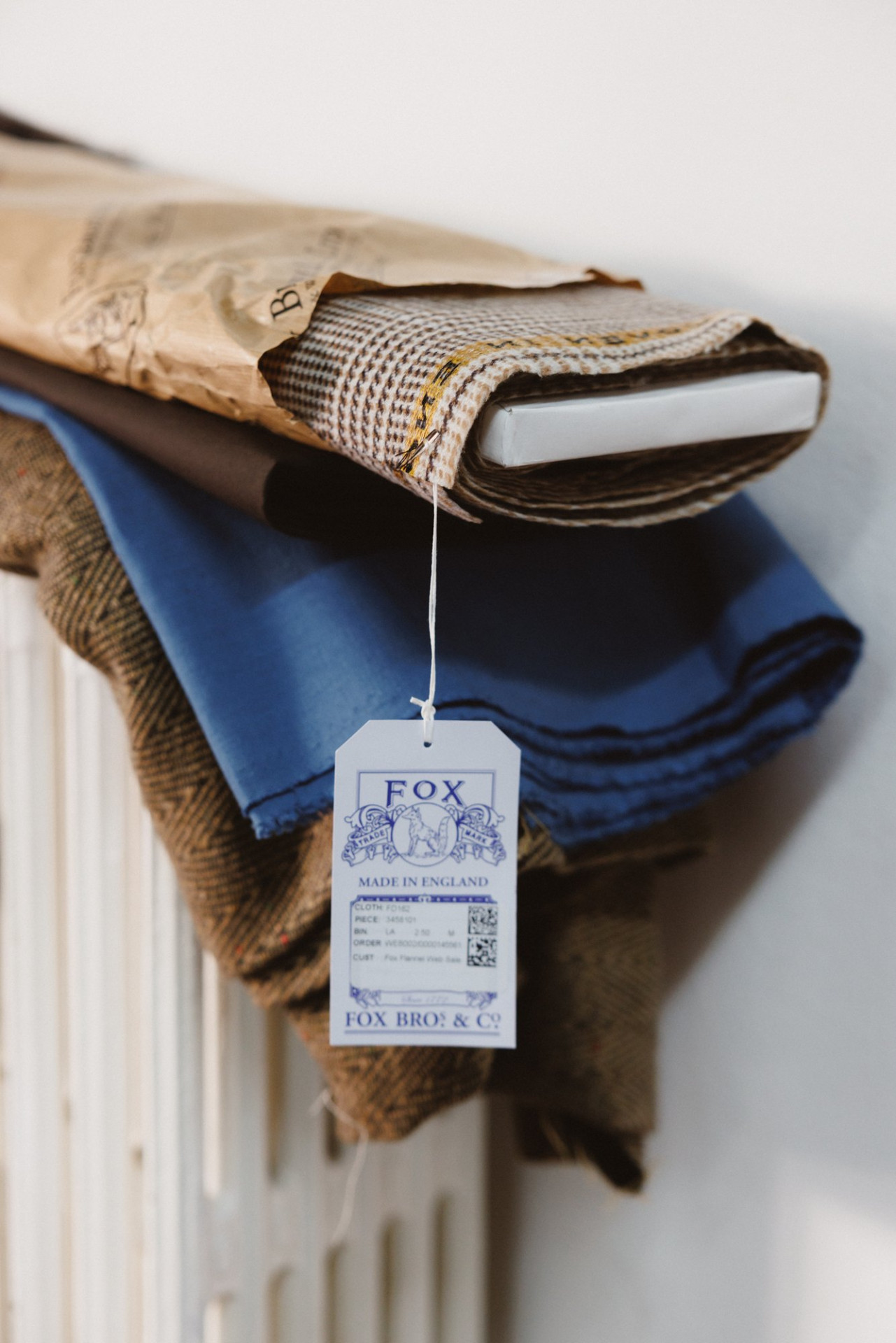
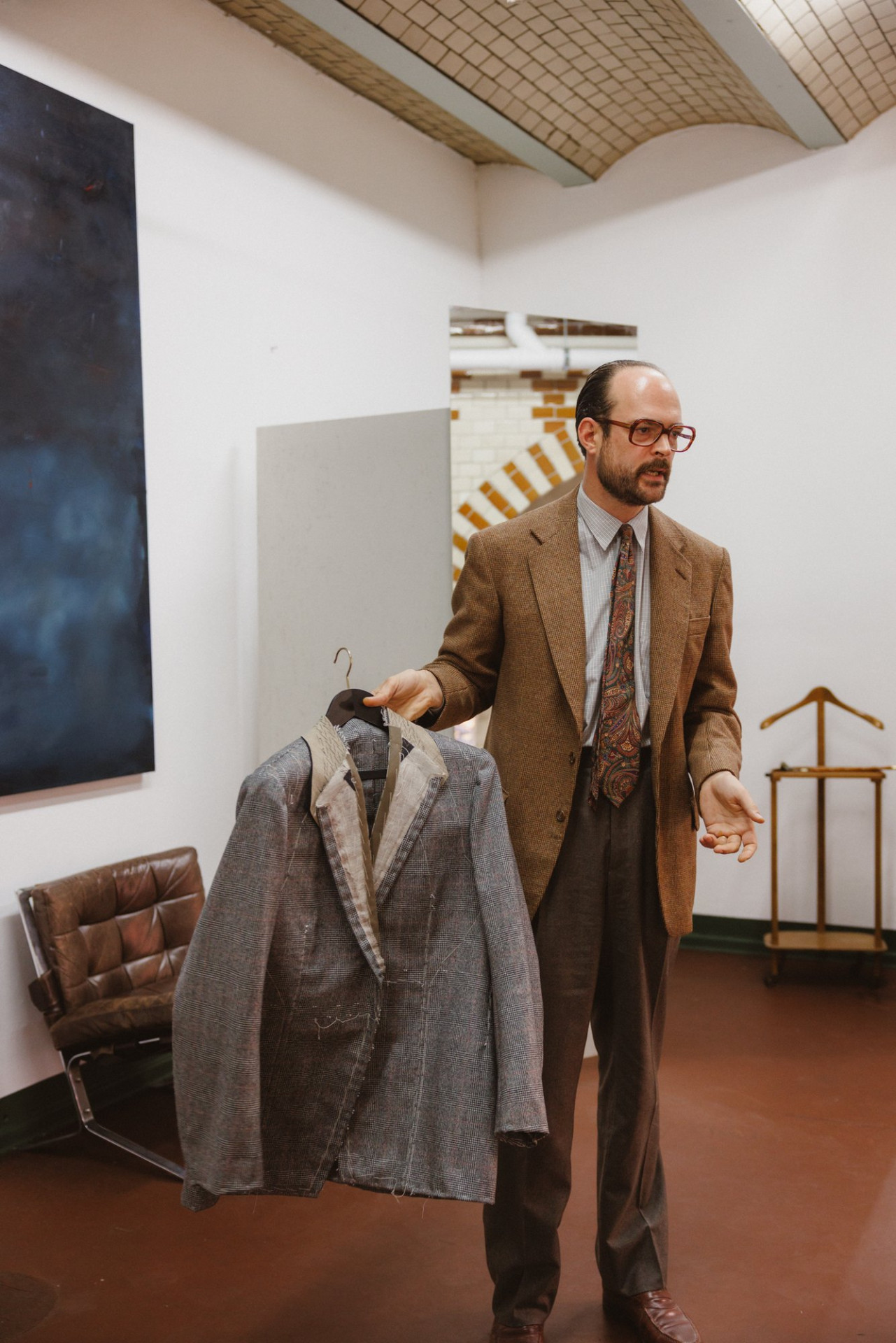
BR: That’s amazing. I’ve never heard about the toile in this way. I’ve heard of people having a checked suit and using a toile for the sleeves.
JW: If it’s a customer’s cloth, I usually do a mock-up. I can reuse the canvas and the collar. And instead of doing another baste, this is effectively a baste, it means I can push it further, maybe a pocket-baste if the fit needs more adjustment, or forward if I’m happy with it.
A Berlin tailor
BR: Do customers know more about cutting tailoring today than maybe 20 years ago?
JW: Actually very few of them are particularly concerned with the technical aspect. There’s a subsection of the customer base, which is important, especially in this online menswear space, who are very interested in the technical side. But my observation is that the customers who really buy big, the people I know who spend a lot of money on tailoring, aren’t interested in this. They don’t have much time, and for them it’s not a hobby.
BR: Do you have customers from other countries, here in Germany?
JW: No, I’m really a local tailor. Ninety per cent of my customers are Berlin-based.
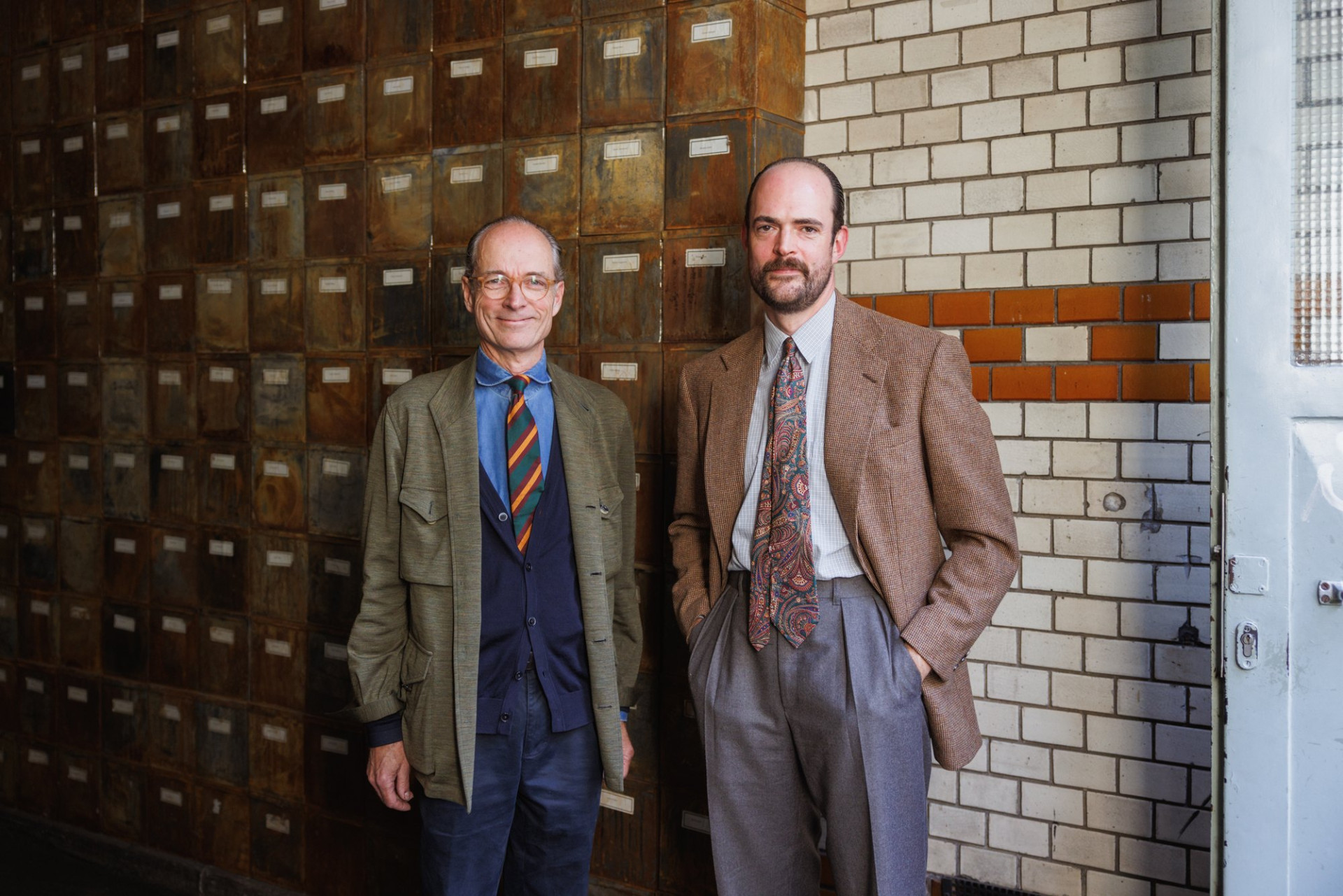
BR: Are you tired of being described as “the only Savile Row tailor in Germany”? I have described you this way countless times. Do customers mention it when they come here?
JW: Nobody particularly mentions it. I’ve been here with this business on my own for seven years, and before with the other company for another seven years. So the Savile Row thing is very distant now. I would just describe myself as a Berlin tailor. It’s such a long time since I had any connection or association with it, sixteen years ago or whatever.
BR: If you look back at Savile Row having been away for such a long time, is there anything that seems odd to you, maybe things you did yourself, or has the world changed since you left?
JW: I would say there’s loads of really fantastic work coming out of Savile Row. They’re still making beautiful things. There are loads of great young people starting companies and doing good things in new and interesting ways. So it still looks great to me. But I’m happy here. I really like doing my own thing, doing the whole process. I think that’s a really lovely way to work. It’s not for everybody, and it’s kind of limiting, but I wouldn’t want to go back to being one part of the process now.