Comments or questions? Bernhard Roetzel replies.
Diesen Beitrag gibt es auch auf Deutsch. Auf Deutsch lesen →
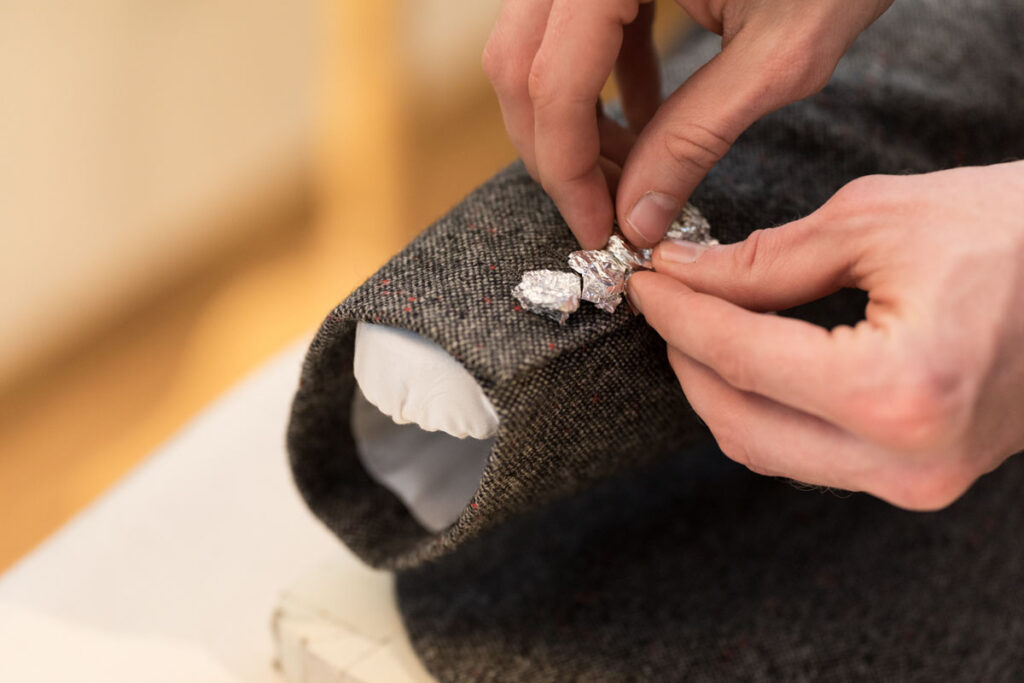
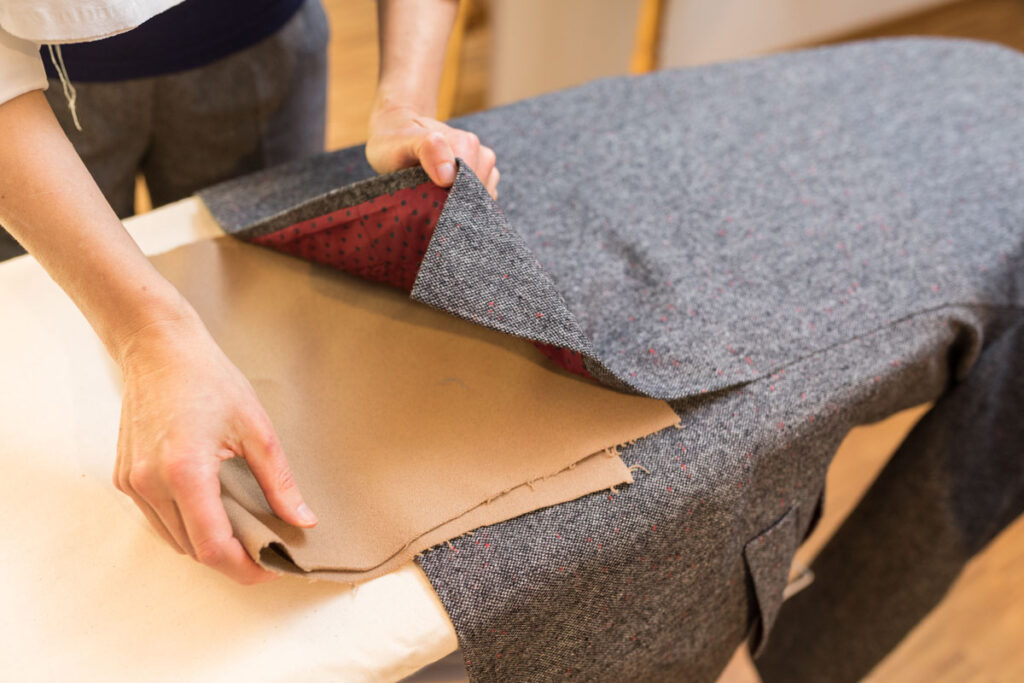
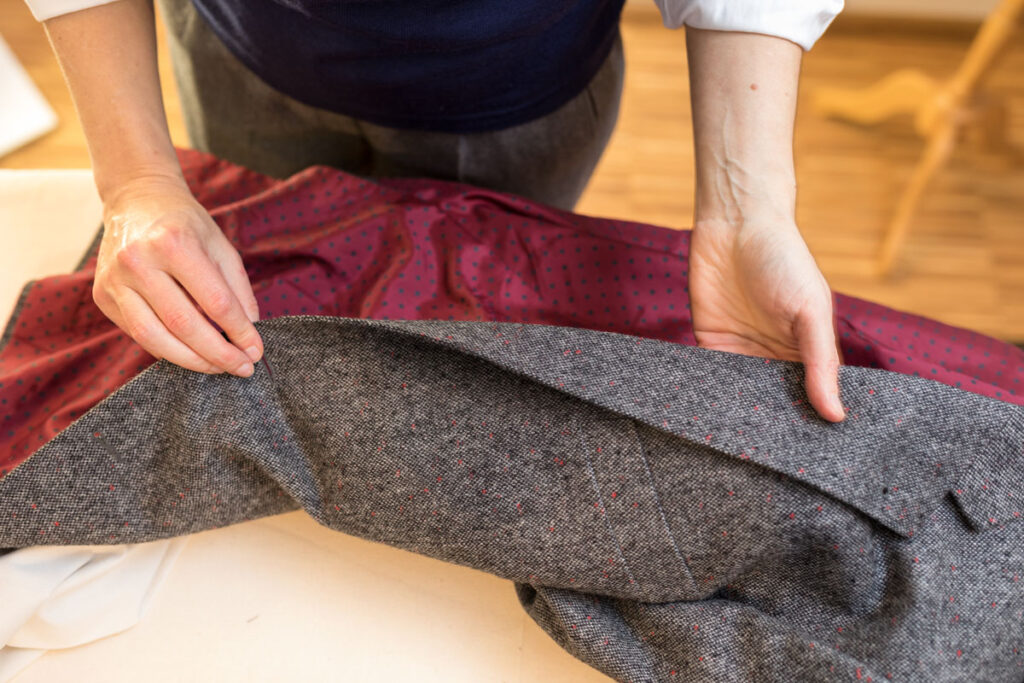
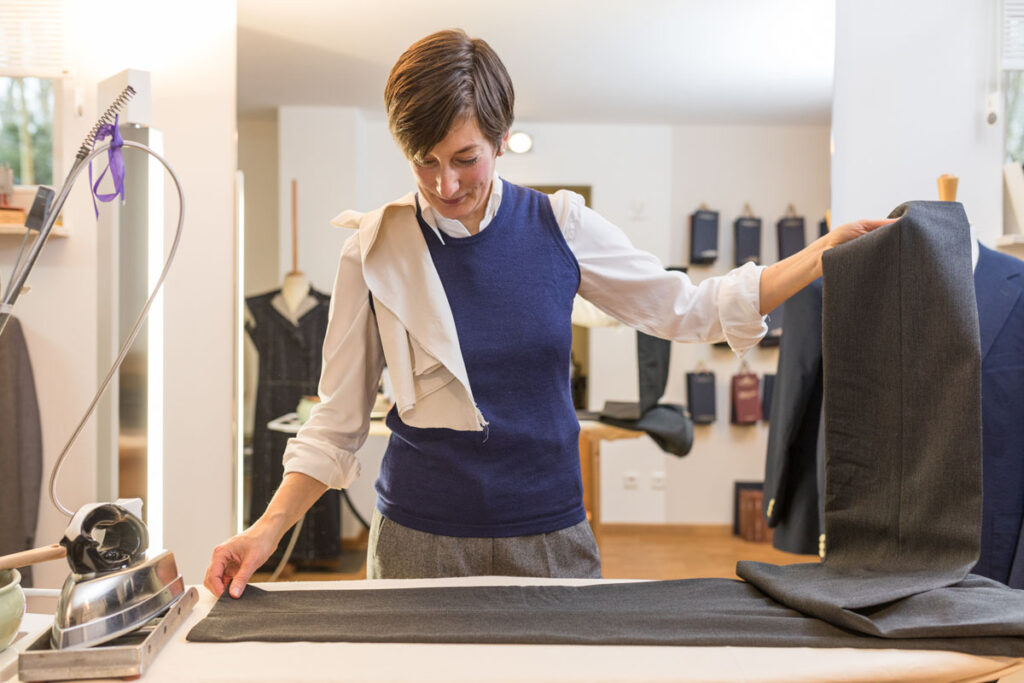
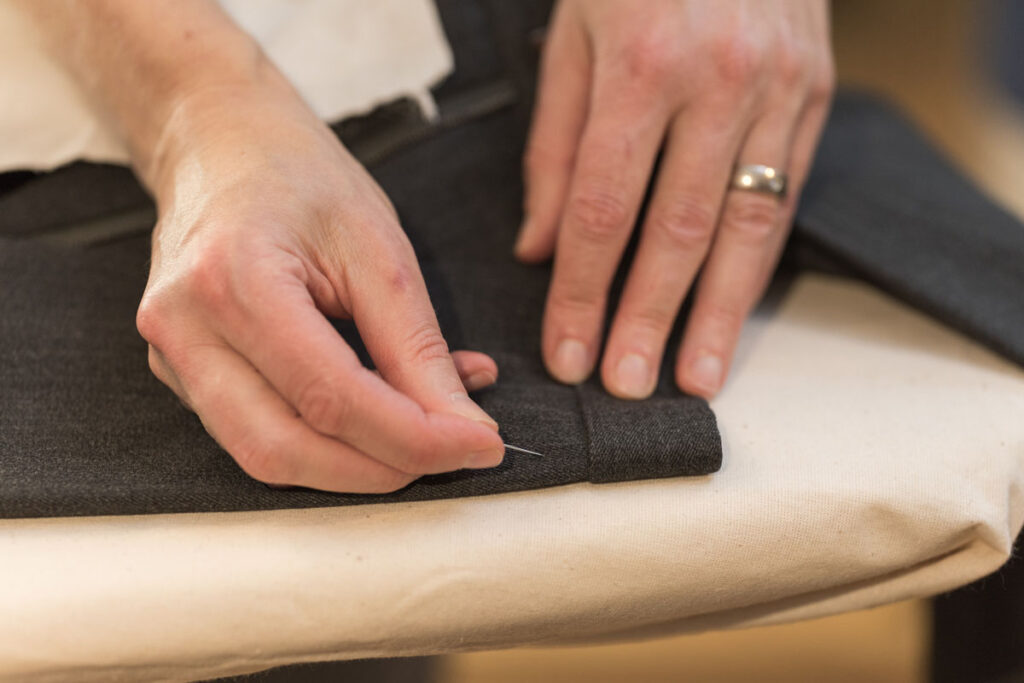
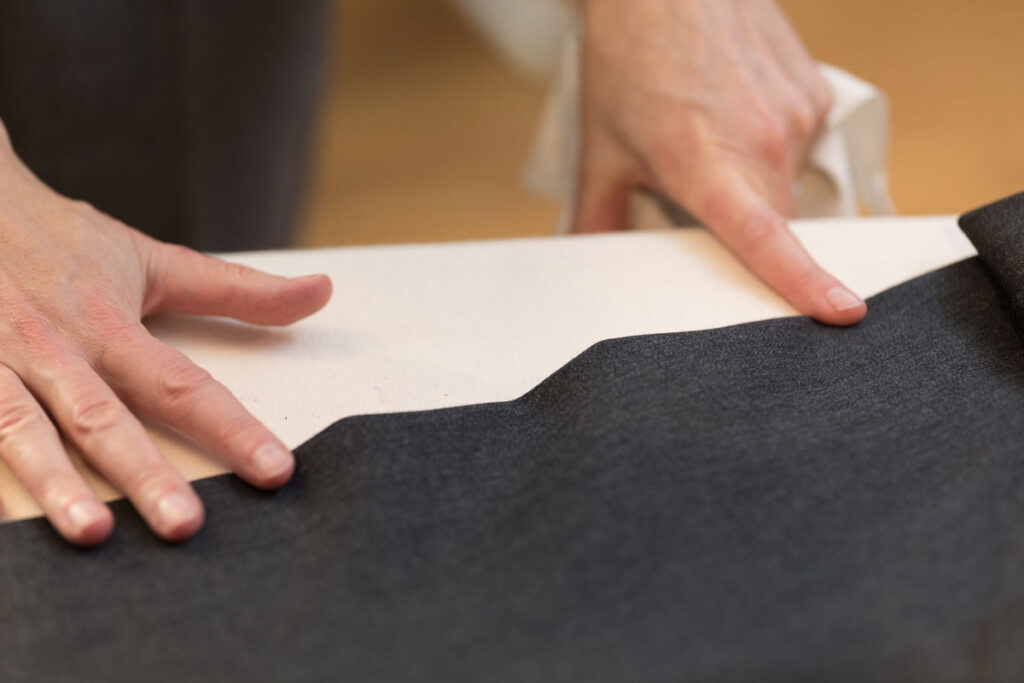
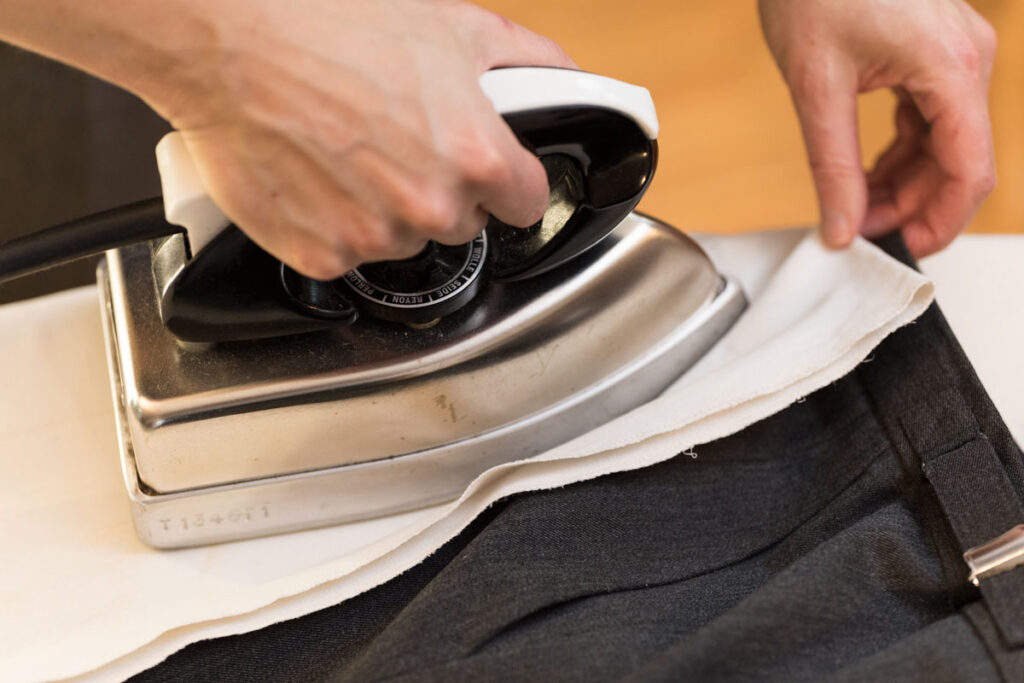
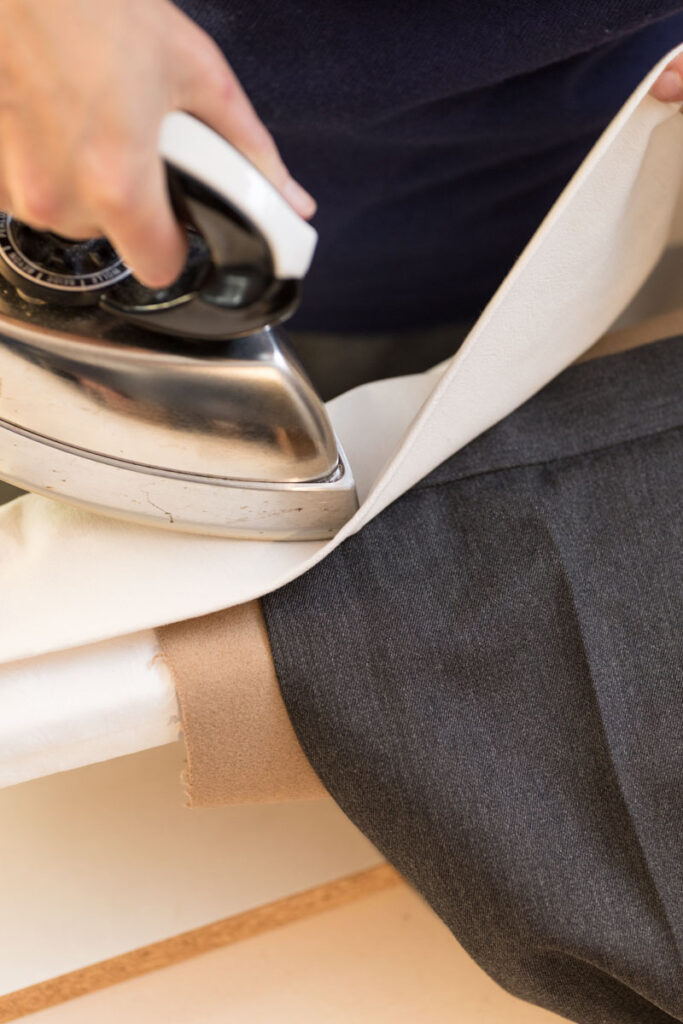
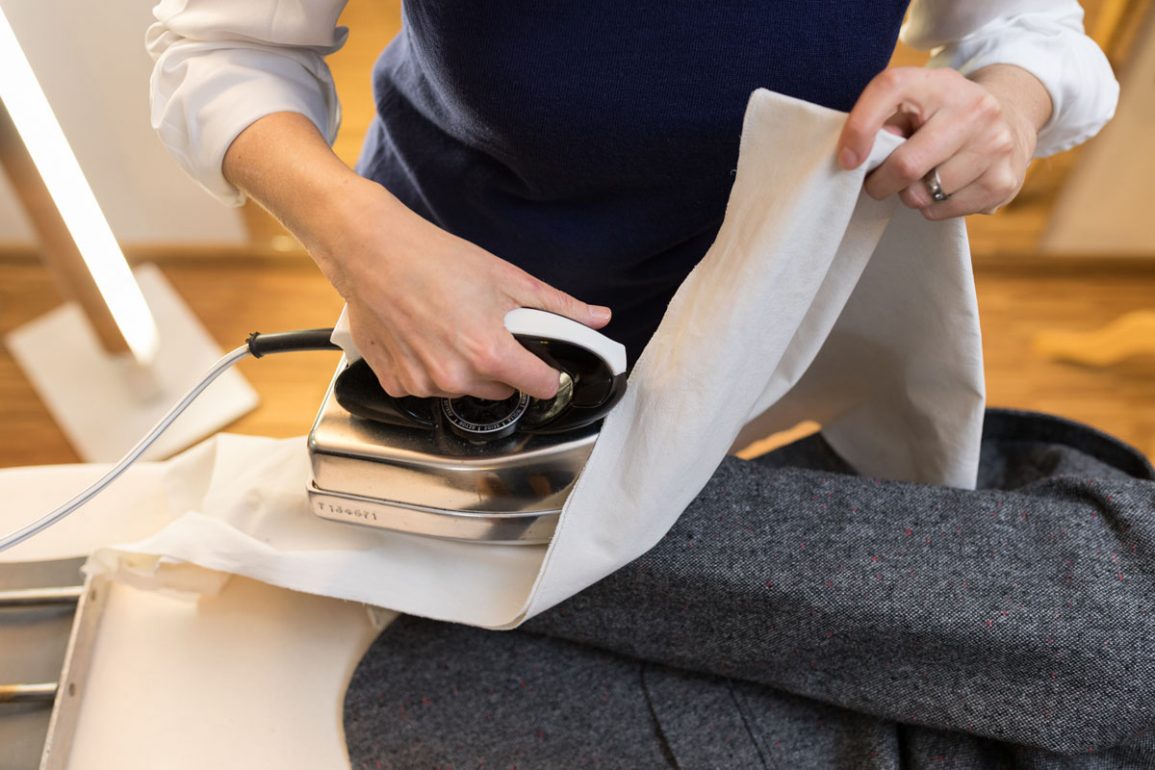
The Potsdam master tailor Kathrin Emmer showed us how she presses. When she is making a suit she uses the iron in quite a different way; here it was only about pressing a finished suit as a matter of care.
Pressing like a tailor, and why technique matters more than force
In tailoring, pressing is almost as important as cutting and sewing. Tailors smooth and shape cloth with the iron, they can stretch it, widen it or shrink it. These are skills that have to be learned and practised, but that does not mean an amateur should not dare to take an iron to a suit. Anyone who can press a shirt can press a suit.
The pressing cloth: the most important rule
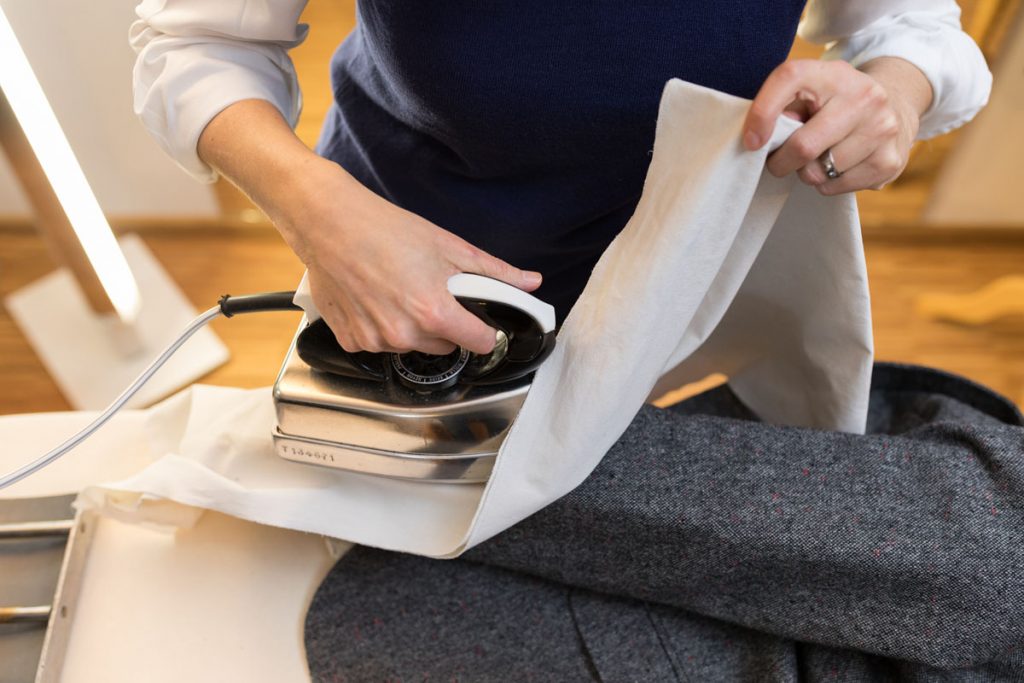
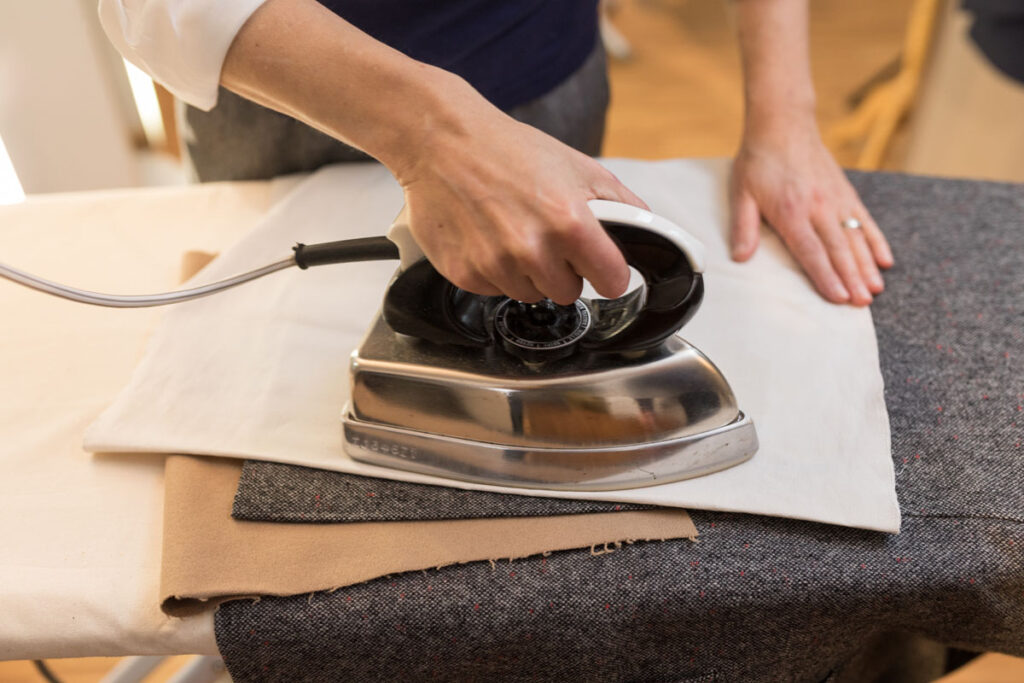
What matters is that you never set the iron directly on the cloth. There must always be a damp cloth between the iron and the fabric. Without it you would press a shine into the cloth. To dampen it, use a brush dipped in water, or a spray bottle of the kind you use for shirts. If you work with a steam iron, the cloth does not need dampening. A large piece of cotton or linen makes a good pressing cloth, ideally one that has already been washed a few times. Old shirts will do as well; the back gives you a big enough rectangle.
While you work, make sure the pressing cloth lies flat and without creases on the suiting, because creases in it will print through. Lift it now and again to check whether the suiting underneath has shifted and is rucking up. Steamers are only a limited alternative to an iron. Steam alone will take out creases, but it cannot smooth cloth the way only an iron can.
Jacket or trousers: what needs pressing, and when
Trousers are what you will press most often. With the jacket it is usually enough to hang it up overnight after wearing. Pressing is only necessary if the creases in the crook of the arm or across the back have not fallen out by morning. How well the cloth recovers depends on its quality, on its weight, and of course on how badly it was crushed. A worsted of 450 g and upwards is as a rule less delicate than a superfine summer cloth of 180 g per square metre.
The technique, step by step